 Everyone out there loves a muscle car. From the roar of that huge engine to the flames on the hood, it is hard to resist looking when you hear one rumbling down the road. But, most people don't really know the history behind the "muscle car", like who created the first one and when were they introduced on the market?
 Almost every historian and car buff credits Pontiac with the first "muscle car" on the market, which was a variation on the Tempest, the 1964 GTO. This first muscle car offered a huge V-8 engine that boasted 389 cubic inches and a floor-shift manual transmission instead of on the column. With a newer, sleek look and trim inside and out that was to die for, who could resist the car that was born that year. These cars sold like hotcakes, even though Pontiac was in direct violation of a General Motors policy on the size of the engines that are placed in their vehicles. It didn't matter, the muscle car was born, and everyone rushed to get in on the action.
 These muscle cars had great performance that was fit for the street or the races, and allowed them to completely dominate every race that they were placed in. It wasn't long before other auto companies wanted a piece of the action, and more styles of muscle cars were born. While some of these other muscle cars bragged about bigger engines and more options, the youth market in America didn't care. The muscle car was all the rage because they embodied rebellion, style, and "coolness".
  But, with every era comes an end, and in the later 1960's there was an uprising about the prices and weights of these muscle cars, which prompted the auto manufacturers to create a "budget muscle car", which carried names like the "Road Runner".
But, even today, the muscle car is still sought after by car buffs, collectors, motor-heads, and rebels in general. They are sought out, fixed up, and rumbling down the road in every town across the United States, and even all over the world. No matter how old or young you are, the muscle car still holds unquestionable bragging rights as well as an instant pass to "coolness".


 If you use a home equity loan instead of a traditional auto loan, the interest may be tax deductible. If you are a man who don't like driving around in a same car in the long term, leasing a car is a good option. If you trade cars frequently, you are throwing away money. With a lease you only pay for the car's depreciation, not the entire car. A car depreciates in value during the first year, and continues to depreciate rapidly until the third or fourth year. You might heed the advice of the billionaire J. Paul Getty who revealed one of his secrets for accumulating wealth when he said, "If something appreciates, you buy it. If it depreciates, lease it." A car starts depreciating the moment you drive it off the lot.People should make the calculations for the payment of buying and leasing a car, and choose the better one to pay. Leasing a car is best for those drivers who want to drive a new car every two to four years.

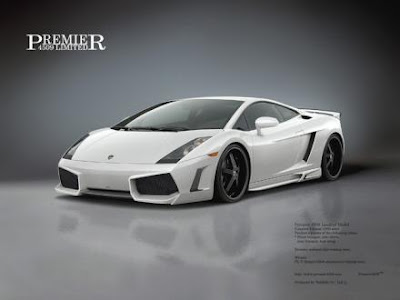 The
The 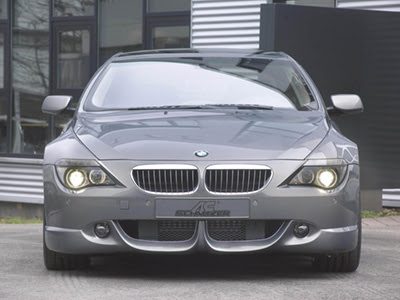

 .Electrically controlled pedals are available for some time now in many Mercedes vehicles. The force you apply to the pedal will not mechanically set the brakes or accelerator on motion. It will only send a signal that a motion is required. This enables the action to occur quickly. This could safe you time when every second counts. For example you will be able to use the breaks in the moment you push the pedal which in many situations could be extremely important.Some programmable Mercedes Benz vehicles are available too. They use electronics to adjust the Mercedes car to the needs of the driver. For example lowering or raising ground clearance could be made easily. This enables the driver to pick the right choice for him.


 The market analysts may have slight differences but in sum they all reach to the same conclusion and are finding the recession as the single factors for its declining. While some of them are blaming the unexpected hike in oil prices also that is hampering the decision of potential buyers even having a plan for buying a car in such condition.Though, the major factor behind this sales decline is seen as the result of credit crunch and avoidance of credit lending by the banks which has been one the best ways for financing the car buying. It is to be noticed that collapse of major financial institutions and increased rate of interest has really stiffen the flow of money in the market that is another worry for these car companies.Seeing the current scenario of car market there one of industry analyst has stated that the country is really passing under a recession while a market analyst has equaled the situation with natural disaster.


 .
. 
 The irony of the situation was pointed out to me at a recent industry function when I was talking to a marketing guru from an airline. He asked me what kind of car I drove and I said quietly that, actually, I can’t drive. “What!” he exclaimed “You work for a car rental company and you can’t drive?!” True. But, I said to him, you work for an airline, can you fly a plane?You see, what I try to market or sell is not driving. We don’t sell the idea of jumping into a rental car, the exhilaration of putting the key in the ignition, turning on the engine and…well, whatever it is that comes next.No, we try to sell the idea of freedom, the thought of having independence and flexibility on holidays, exploring new places, making memories and having a good time. We try to inspire people to visit places off the beaten track and discover new things.So does it actually matter that I can’t drive? Do you think dog food marketers have actually tasted what they’re selling? Exactly.


 These sensors are placed on the several vital parts of the vehicle to be able to monitor the movements of the car. Many cars of today are already fitted with sensors for various purposes; some to check what the car is doing when the wheels turn and another monitors the movements of the wheels. There are also brake sensors that time the spin of each wheel and sensor on the airbags which will trigger the airbags if and when an impact occurs.


 .
. Start
Start


 Monster Truck